ASCO: Now and Then

 In medical school I drove a cab at night to make ends meet. I rented the medallion from a guy for $50 and kept the difference I made. The Army paid me $692 a month stipend on the Health Professions Scholarship and the studio apartment in downtown Chicago was $1000/month. I wasshort over $300 a month.
In addition to driving the cab, I worked as a bicycle messenger, through rain, snow, sleet and hail to finish my appointed rounds. In between I grossed the skin biopsies for the Dermatopathology Laboratory at the hospital. Nearly 25,000 accessions annually. All but a couple hundred a year I did. This way I could make the rent, afford the expensive grocery store and perhaps get some Thai food for $5.95 occasionally. Haircuts at the Allertown Hotel were $8 for students with a shot of whiskey. Had to keep my hair high and tight.
The best weeks as a cabbie in Chicago are the week of RSNA and ASCO. RSNA, given the time of year, shuttling people between the hotels and convention center and taking spouses out on Michigan Avenue for shopping and dining. 50,000+ people and family members is a lot of heads in beds who need transportation. ASCO, with its 60,000+ people, all looking to get to the meeting and to afterhours engagements literally kept the meter running and moving. The best tips I received were in those weeks. Perhaps they took pity on me when I told them I was in medical school and looking to attend those meetings as card carrying members myself someday.
Medical students in Chicago, given its location for meetings and the number of professional societies, organizations and colleges, invited all of us from the 7 medical schools to their meetings and programs and Lake Michigan excursions space permitting to hear about the latest advances and therapies. Occasionally I would spend some time at RSNA or ASCO in between runs or actually fishing behind McCormick Place watching planes take off and land at Meigs Field at the time.
Have since attended ASCO many times in the past 35 years. Perhaps as one of only a handful of pathologists, either in my capacity as a surgical pathologist or with industry colleagues.
In 2016 I wrote a piece suggesting that the further convergence of diagnostics, molecular and therapeutics was at a tipping point. There were thousands of posters on PDL-1 and hundreds of platforms and dozens of lectures on  the topic for lung and renal cancer and melanoma.
The excitement among the oncologists was palpable is what I believe I wrote then, now in the cloud archives from 10 years ago.
I suggested we as pathologists make sure to insure, as keepers of the tissue, slides, blocks, testing, result and reporting, that we were a part of this process. I further suggested we add KEYTRUDA to the drinking water in lieu of fluoride. Some places have eliminated fluoride.
I spoke with dozens of oncologists who told me we were entering a golden age for oncology. That more people would be living with cancer longer and would have long-term disease-free survival and cures the likes of which the world has never seen. According to multiple national and international databases, this has already occurred.
We had moved beyond surgery vs. chemotherapy or 1 regimen or another based on histology, grade, tumor type or stage. Treatment would not be for a specific type of tumor or based on what organ it originated in, but rather its genotype, well beyond what slide based immunohistochemistry will tell us. ER, PR, HER2, EGFR, ALK1, ROS, etc.…were important but targeted, personalized, directed and cell specific, rather than organ or tumor specific modalities would be used.
CAP Today had a table there as they do annually and I saw some familiar faces rather than answering the question by oncologists, “What is a pathologist doing here?” In subsequent years a few more pathologists have attended ASCO and of course we all continued to serve our clinical colleagues at our local hospitals 12 months a year beyond the first week of June in Chicago. Vice President Joseph Biden spoke about Cancer Moonshot as his term was winding down. The new administration in 2017 didn’t follow this through. A pandemic sidetracked it further.
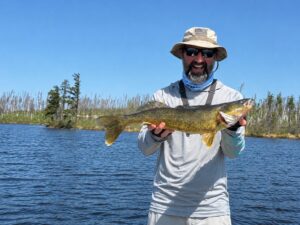
Has been interesting to read about other pathologist’s experiences and thoughts across several platforms. Perhaps for many of them, their first ASCO meeting. Rekindling our usual ideas about data rich data sets in whole slide images in the H&Es and the blocks beneath behind the paraffin curtain as I have heard it called. The need for reliable testing, quality, further validation and collaboration. I missed ASCO for the first time in many, many years, at least the weekend due to a fishing trip in Canada that overlapped weeks. I have to tell my friends no more scheduling these during ASCO!
As was already the case in 2016, this train left the station a long time ago. This train left the station the first time an oncologist dropped off a cardboard box of ONCOTYPE DX kits and told me “Every breast cancer gets a tumor block put in here and sent out.” That was circa 2010 for me.
I used to call oncologists and say, “small cell” or “non-small cell”, then of course, “squamous” or “adenocarcinoma” or one of the other myriads of histologic classifications. Later, adding, EGFR, ROS and/or ALK1 status and subsequently PDL1 and so forth.
Now if I can get the words out “this is malignant, and it is…” before the oncologist asks “do we have enough tissue for next gen sequencing” it is a rare day for me. It takes them milliseconds. Sure, great, it is non-small, favor poorly differentiated squamous cell with lymph node involvement but I need the NGS. Make sure the block has enough tissue.
I estimate that at least 10% of my day is spent on managing such matters, selecting blocks, putting that in the report, ordering the tests and later issuing addendums with the results.
Our secretaries, printing the labels and sealing the boxes tell me 40% of their day is consumed with this. The time saved with digital pathology and not pulling cases for tumor boards has been replaced and then some with the myriad of molecular testing send outs and dealing with a flow of disparate data from multiple laboratories. And that assumes the block is received, testing performed, and result received, and the block is not melted upon return for the next assay.
I am increasingly concerned that molecular will ultimately replace morphology and have written so before. It is happening at a pace faster than I thought previously. The latter will simply be a tool for the former for tumor adequacy and damn to grade and stage and mitotic counts and immunohistochemical phenotypes!
Fortunately, unless you are a full-time cancer center pathologist, we still have endoscopic mucosal GI biopsies, basal cell carcinomas, seborrheic keratoses to rule out melanoma, appendixes, hernia sacs, placentas and gall bladders.
At least until AI replaces pathologists to do that work…