 30 years ago, as of last month, I admitted an elderly woman to the ICU for a complicated pneumoniae requiring mechanical ventilation and vasopressor support. As a first month medical intern you learn to swim or drown. Fortunately, I didn’t drown in July of 1996 but I had many sleepless nights making sure that first, I did no harm.
Grouped with newly minted residents, fellows and attendings, we managed. I had good physician mentors and better nurses. The interns helped one another. At any one time there may have been 10 patients on a ventilator and you’re main goal was trying to keep them alive until morning rounds at 0530 so the next poor shmuck would be in charge of the same before signing them back out to you at 1730 for another night.
Following a trip to Arizona in June, the Johnsons returned to Washington, DC and Mrs. Johnson started to complain of shortness of breath, fevers, chills, loss of appetite and became seriously ill over a few days. She had contracted a fungal pneumonia and combined with her underlying emphysema and congestive heart failure, landed in the ICU on the 4th of July.
MSG Johnson served in the Pacific during World War II. He later served during Korea as well but remained stateside, claiming he “aged out of killing the bad guys” by that time. He was involved in logistics and retired from the Army. He and his wife raised their family a few blocks from Walter Reed Army Medical Center in the Tacoma Park neighborhood. I asked MSG Johnson about his experiences in the Pacific. He didn’t share much. You could tell even 50+ years later he wasn’t about to go into any details about what he did and saw.
Mrs. Johnson, after weeks of mechanical ventilation, lots of Amphotericin B, vasopressor support, round the clock care and surviving a month of new interns, was well enough to be transferred to the “floor” or general medical ward, by the end of the month.
She happened to be on the ward my team was assigned and continued to be my patient. I met her children and siblings. I tried to get MSG Johnson to tell me about WWII when I would make my pre-rounds or had a few minutes between chores on the floor.
On two occasions I removed fluid from around Mrs. Johnson’s lungs using a long needle attached to a hose and glass bottles with nothing more than percussion at the bedside. No ultrasound or CT scan or interventional radiology or pulmonary consult. 3 AM with a resident with CNN on the TV. See one, do one, teach one by the end of August
My second month as an intern I learned a cardinal lesson in medicine:
Never let the sunset on a pleural effusion.
I wouldn’t let it happen again. The second time I performed the procedure it was 10 AM and a little easier to get a portable chest x-ray read to make sure there was no pneumothorax. Or at least not a big pneumothorax.
There were dozens of patients like this. Retirees, veterans, their spouses, in some cases, their children, with chronic medical conditions that our ward team, like a dozen other, looked after and cared for. The attendings would be present in the morning before their clinics and perhaps before going home in the evening and beyond that the house staff was largely on its own. With our paper charts and piles of x-rays, EKGs and consult notes.
By the end of August, Mrs. Johnson was discharged from the hospital. I did the best I could to write a discharge summary that spanned the prior 2 months as neatly as I could handwritten, and hole punched to put into her chart which consisted of volumes of binders by this time. She went home with prescriptions for her COPD and heart failure and directions to follow up with her primary care physician within a week. It was just another day in the office in the life of a medical intern.
Before MSG Johnson and his wife left the ward, he handed me several dozen small pieces of paper that looked like receipt paper which read “9 Holes” with his initials. He had told me he worked at one of the Montgomery County public courses, nearly all of which were excellent, and I was welcome to show those anywhere and get 9 holes free anytime. He said he appreciated what I did for his wife.
The next time I was post call, I took one of the handwritten coupons to my local course a few miles from our townhome in Silver Spring, MD. I presented the coupon in the pro shop and thought this likely would not work. The man behind the register recognized what I handed him and gave it back to me. He said that MSG Johnson told the office to expect me and directed me to the starter, making a radio call that “Doc” was coming out.
On days when MSG Johnson happened to be working, I didn’t even present a coupon, he just said, “Hey doc” and told me to hit ‘em straight. Over time the others stopped asking for the coupons. 9 holes became 18 or 27 or 36. I kept about a dozen of those “9 holes” in my golf bag for many years, and now in a shoebox, faded, wrinkled and torn.
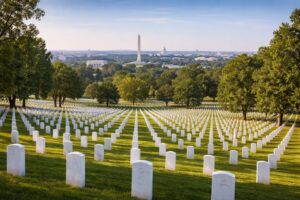
MSG Johnson passed away many years after that. On a trip with visiting family to Arlington National Cemetery, I searched the directory for the site of MSG Johnson’s grave and made a visit to the site.
I learned of his death from a starter on one of the courses I had played 100s of times, long after I should have run out of coupons on a sunny afternoon in August as a staff physician at Walter Reed when I was then mentoring new interns and residents to learn how to swim and not drown and making sure to tell them to never let the sunset on a pleural effusion.